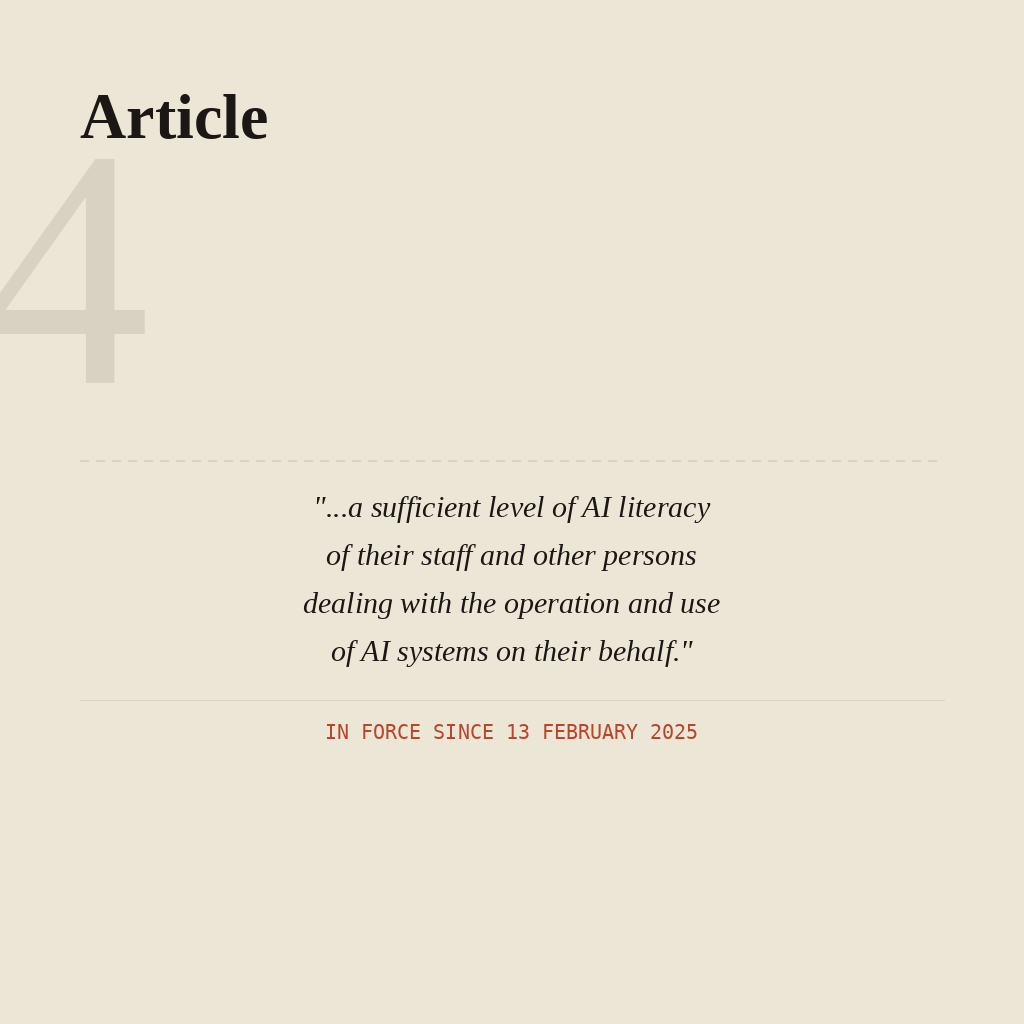

Article 4 of the EU AI Act is brief and often overlooked. It reads: providers and deployers of AI systems shall take measures to ensure, to their best extent, a sufficient level of AI literacy of their staff and other persons dealing with the operation and use of AI systems on their behalf.
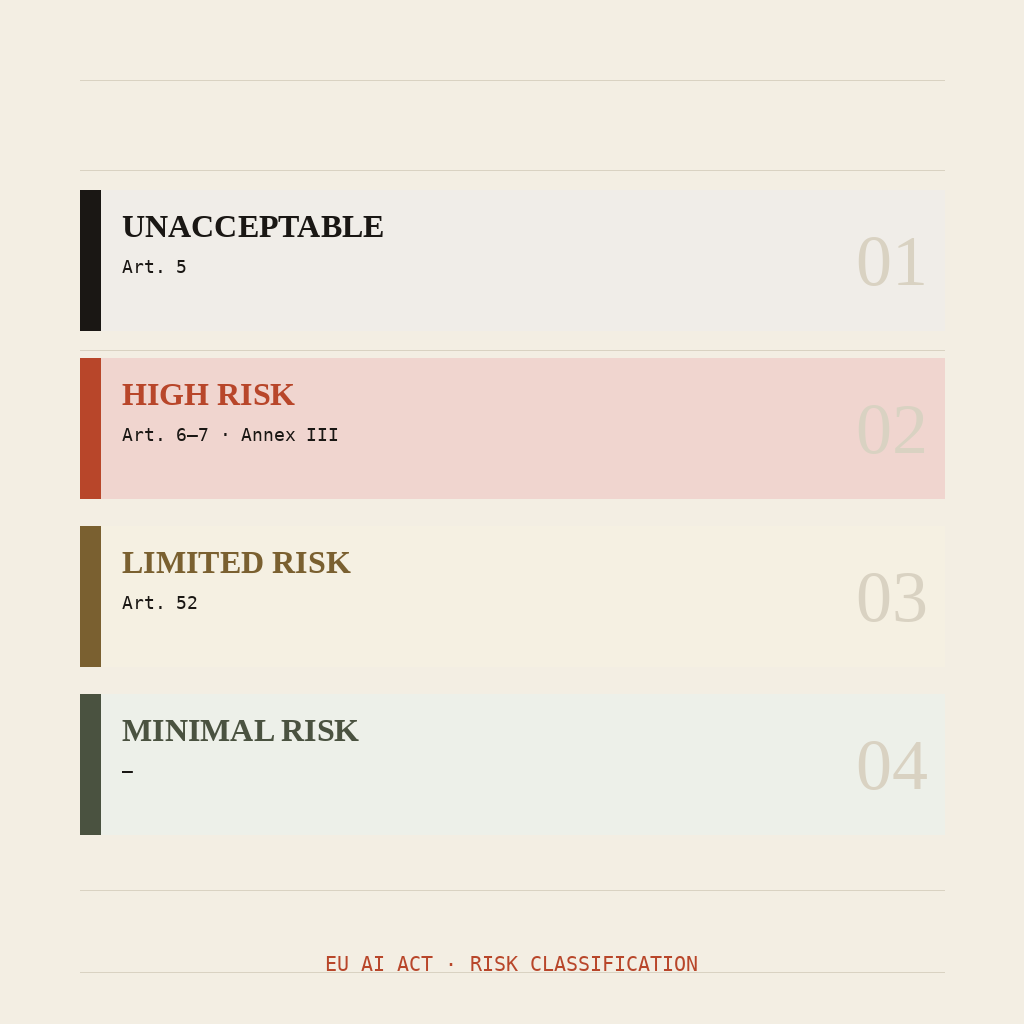
The obligation applies to both providers (those who develop or place AI systems on the market) and deployers (those who use AI systems in their own operations). It has been in force since 13 February 2025 — the same date as the prohibited practices provisions under Article 5.
What "AI literacy" means
The Regulation does not define a minimum standard for AI literacy, but Recital 20 gives useful guidance. It describes AI literacy as the skills, knowledge, and understanding that allows providers, deployers, and users to make informed decisions about AI — including awareness of the opportunities and risks AI presents, and the ability to understand the outputs AI systems produce.
In practical terms, this means different things for different roles. A procurement officer needs to understand what questions to ask when evaluating an AI system. A line manager deploying an AI-assisted hiring tool needs to understand how the system reaches its outputs and what its documented limitations are. An engineer building AI pipelines needs a more technical understanding of failure modes and bias.
The obligation is not to make everyone an AI expert. It is to ensure that the people handling AI systems — at whatever level of engagement — have the literacy appropriate to that role.
The enforcement picture
Article 4 does not carry a specific fine in the penalty schedule. Non-compliance is captured by the general non-compliance provision in Article 99, which covers breach of obligations that are not separately enumerated. Market surveillance authorities have discretion on enforcement.
That said, AI literacy has a direct bearing on other obligations. The human oversight requirements under Article 14 assume that the natural persons responsible for oversight have the capacity to exercise it. An organisation that cannot demonstrate basic AI literacy training will struggle to make a credible case that its oversight model is functional.
What a reasonable response looks like
A proportionate response to Article 4 involves three things: a mapping of which roles interact with AI systems and at what depth; a training baseline appropriate to each role; and a record that the training was completed and is refreshed as systems evolve.
This does not require extensive infrastructure. In most cases, it requires decision, documentation, and follow-through — which are precisely the things Article 4's open-ended drafting allows regulators to ask about.
Reference: Regulation (EU) 2024/1689, Article 4. Recital 20.