Strategic R&D: Navigating AI Cycles for Competitive Advantage
Traditional R&D models are too slow for the AI era. Learn how to manage nonlinear development cycles and bridge the gap from lab to production.

Strategic R&D in the AI Era
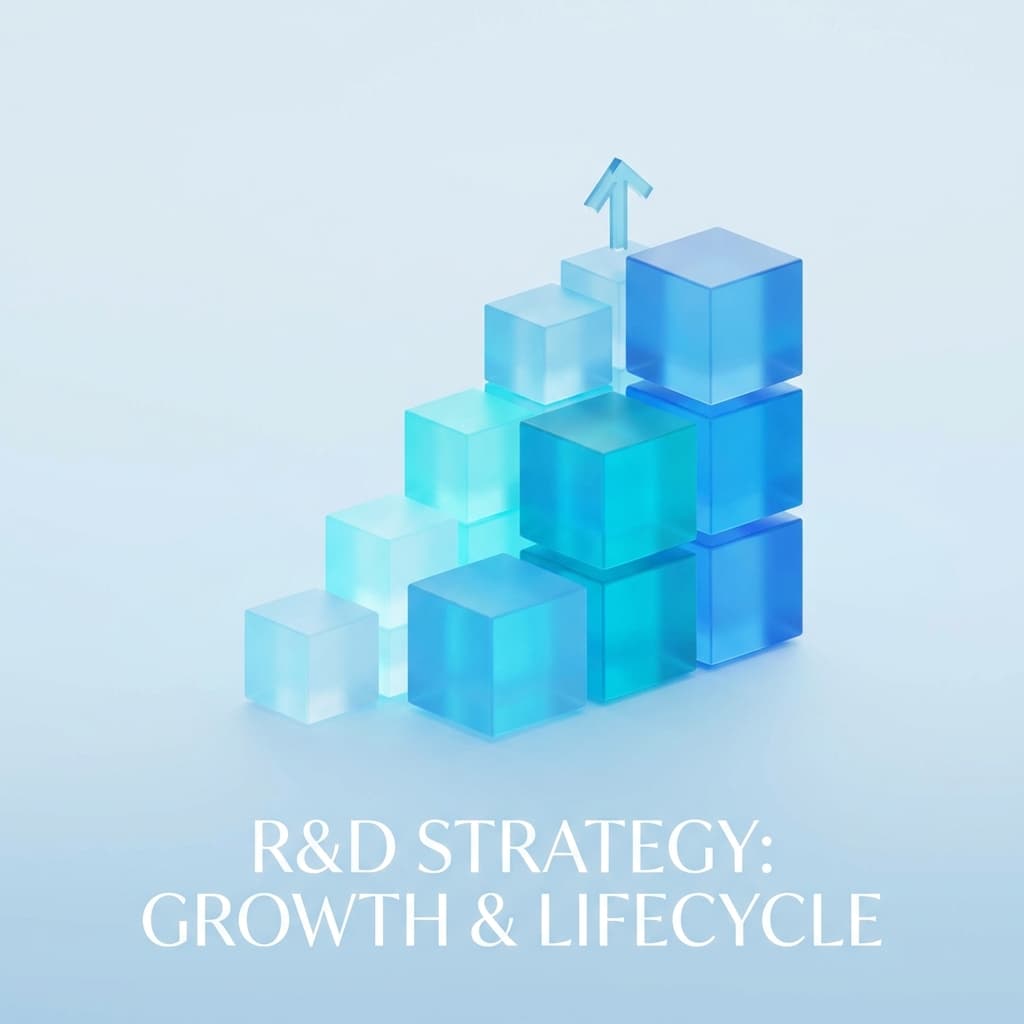
The traditional "Waterfall" R&D model is dead. In a world where foundation models are updated quarterly, organizations must adopt a Nonlinear R&D Strategy to stay competitive.
The Velocity Trap
Many firms fall into the trap of constant experimentation without ever reaching production. This "POC Purgatory" happens when R&D isn't aligned with a clear productization path.
The BelkX R&D Workflow
At BelkX, we manage R&D across three distinct horizons:
Horizon 1: Core Optimization
Using narrow AI to drive immediate efficiencies in current production lines. This is the low-hanging fruit with guaranteed ROI.
Horizon 2: Applied Innovation
Exploring new model architectures (like Vision Transformers or State Space Models) for next-generation products. This requires a 6-12 month outlook.
Horizon 3: Strategic Moonshots
Long-term bets on autonomous systems and hardware-software co-design.
Closing the Gap
The most critical stage of R&D is the Transition Layer. We help teams build "Production-Grade" sandboxes that simulate real-world constraints (latencies, hardware limits, user behavior) from day one.
Conclusion
R&D is no longer a cost center; it is your primary engine for market differentiation. By structuring your AI research with production in mind, you ensure that innovation translates directly to the bottom line.
Explore how our POC Lab accelerates your R&D cycles. Visit the POC Lab.
About the Author
BelkX Team
R&D Strategy
BelkX is an engineering-first consulting firm specializing in AI Audits, R&D strategy, and production-grade autonomous systems. We bridge the gap between experimental prototypes and robust, scalable, and ROI-driven technological solutions.